
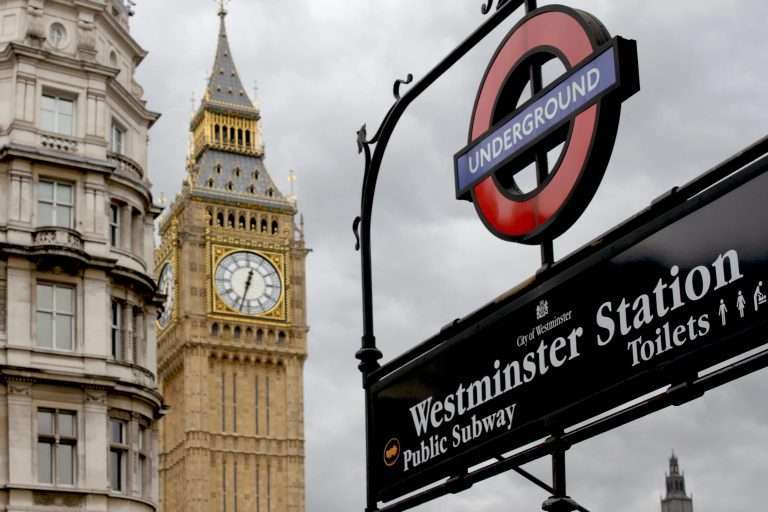
Over 60 and Still on Time: Visiting Big Ben in London
Some people say, “Time flies when you’re having fun.” I say, “Time stands still—when you’re standing under Big Ben.” And let me tell you, as someone over 60 with a passport, a decent pair of walking shoes, and a deep love of history, visiting Big Ben in person was like stepping into a postcard I’ve seen a thousand times—only this time, I was in it.
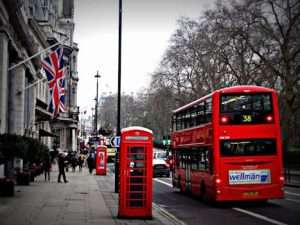
This wasn’t just about a famous clock tower. It was about feeling the heartbeat of central London, watching double-decker buses rumble by, hearing those deep, familiar Big Ben chimes, and knowing I was in the presence of something timeless.
Let me walk you through the sights, the history, the surrounding gems, and everything in between—so you can feel like you’re right there with me.
Let’s Start With the Basics: What Is Big Ben, Really?
Most people call the entire tower Big Ben, but let’s get our facts straight (because we’re over 60 and love our trivia).
The name might’ve come from Sir Benjamin Hall, a large man with an even larger presence in Parliament, whose name was supposedly inscribed on the bell.
Others say it was named after heavyweight boxing champ Benjamin Caunt. Either way, it stuck.

The clock tower itself was officially renamed Elizabeth Tower in 2012, in honor of Queen Elizabeth II’s Diamond Jubilee. Before that, it was simply known as the “Clock Tower”—which, let’s be honest, is a little underwhelming for such a majestic structure.
This tower is a key part of the Palace of Westminster, which also includes the House of Lords and the House of Commons chambers—places where major decisions, royal announcements, and spirited debates have shaped the UK for generations.
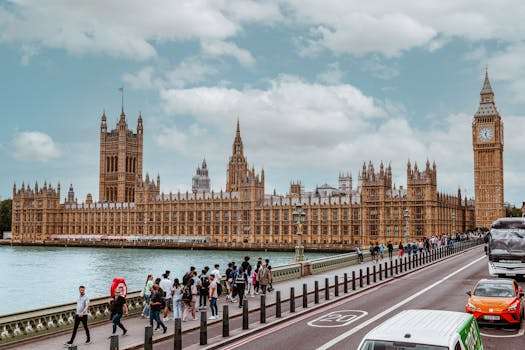
The tower stands proudly at the north end of the Houses of Parliament, overlooking the River Thames.

It is the largest clock in the world! For an interactive tour click here.
From there, it’s a short hop to so many must-see spots: the London Eye, Trafalgar Square, Parliament Square, and Buckingham Palace. It’s practically the epicenter of central London—where history, politics, and sightseeing all collide.
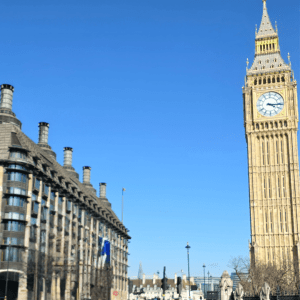
And when I say it’s tall—I mean tall. The tower rises to about 316 feet (that’s 96 meters for our metric friends).
The clock faces are each 23 feet across—imagine balancing a two-story house on each side of the tower! And those minute hands? They stretch over 14 feet long. No wonder they call it a marvel of Victorian engineering. Imagine the arthritis those hands must have if they were real—tickin’ non-stop since the 1800s.
It’s more than just a pretty face though. Those clock mechanisms have kept accurate time through wars, storms, and yes—even London traffic.
It’s broadcast on the BBC and has become the literal sound of Britain to millions around the world.
A Look Back in Time: Big Ben’s Storied History
The story of Big Ben begins in the mid-nineteenth century, after a devastating fire tore through the original Palace of Westminster in 1834, leaving only a few medieval parts standing, including Westminster Hall. With the heart of British government in ashes, the need for a new, grand design arose.
A competition was held to find a design for the new royal palace and parliamentary complex. Out of 97 entries, the winning vision came from Sir Charles Barry, who imagined a sprawling, symmetrical Gothic structure. But Barry wasn’t a Gothic architect by trade, so he turned to Augustus Pugin, a young genius in Gothic Revival design.
Pugin added the towers, spires, intricate carvings, and dramatic style we see today—including the now-iconic clock tower we all call Big Ben.
Construction on the clock tower officially began in 1843, using sandstone and cast iron elements that were state-of-the-art at the time. By 1859, the Elizabeth Tower (as it would later be called) was completed, and the Great Bell—Big Ben—rang out for the first time across central London.
That bell? It was originally cast in 1856 but cracked during testing. It was recast by the Whitechapel Bell Foundry, a historic company that had been crafting bells since the 1500s.
The new version weighed over 13.5 tons—and wouldn’t you know it, it cracked too! But instead of scrapping it, they simply rotated the bell slightly and adjusted the hammer. That crack gives Big Ben its one-of-a-kind sound, instantly recognizable and deeply woven into the British identity.
Through the years, Big Ben became more than just a timekeeper. It became a national symbol.
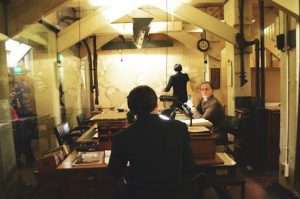
During World War II, London was bombed relentlessly in the Blitz, but Big Ben never missed a beat. Although part of the House of Commons chambers was destroyed in 1941, the clock tower stood firm.
The sound of Big Ben chiming every hour reminded citizens that, despite the destruction, Britain stood strong. It became a symbol of resilience—heard on the radio, felt in the hearts of a nation trying to hold on.
Big Ben has also marked countless milestones—New Year’s Eve, Remembrance Sunday, the death of monarchs, and the celebrations of jubilees. The tower has seen the rise and fall of prime ministers, world wars, coronations, and Olympic Games.
It’s stood through restoration of the tower, changing skylines, and the endless chatter of tourists asking, “Is that the real Big Ben?”
So the next time you hear it toll, know this: it’s not just a bell—it’s history ringing through the air.

Tick Tock: Inside the Clockwork
Let’s talk about what makes this timepiece tick—literally.
The clock mechanism room inside Big Ben is one of the most impressive examples of Victorian engineering still operating today. Designed by Edmund Beckett Denison (a barrister with a passion for mechanics) and built by clockmaker Edward John Dent, this intricate system was lightyears ahead of its time in the 1800s. It combined brilliant craftsmanship with groundbreaking accuracy, so much so that it set the global standard for public clockmaking.
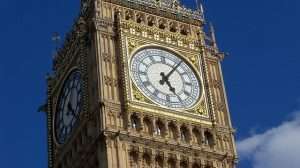
The entire mechanism works on a carefully balanced gravity escapement system, which basically allows the pendulum to swing without being affected by external pressures—like wind on the massive clock hands. And speaking of the pendulum—it’s a beast. It swings every two seconds and measures over 13 feet long.
Now here’s where it gets charming: the timekeeping is fine-tuned using old British pennies. Yes, you read that right. They still adjust the timing by adding or removing coins on the pendulum. One penny adds about 0.4 seconds to the clock’s speed every 24 hours. It’s the kind of old-school genius that makes you shake your head and smile.
Each of the four clock faces is made from opalescent glass, set within a cast iron frame, and lit from behind so it glows at night. And believe me, when you’re walking around Parliament Square after dark and see that warm glow lighting up the tower—it’s pure magic.
Can People Tour Big Ben?
If you’re a UK resident, you’ve got a golden opportunity: you can apply for a guided tour inside the tower. (I may or may not have sighed a little louder than necessary when I found out it’s only for residents!)
Tours are free, but they do need to be booked well in advance—there’s often a waiting list, especially during peak seasons.
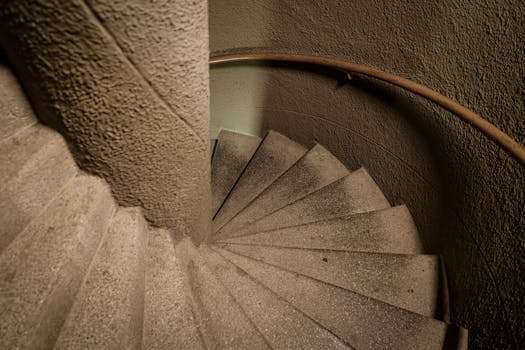
These Big Ben tours take you up 334 stone steps—no elevator, so bring your sturdy shoes—to the belfry, where you get to witness the Ayrton Light up close. This small, glass lantern was installed in 1885 so Queen Victoria could see when the House of Commons was in session, even at night. Today, it’s still used during parliamentary meetings.
As you climb, you’ll pass through the clock mechanism room, see the gears in action, and get right up close to the Great Bell. It’s loud, powerful, and unforgettable—like standing next to a heartbeat made of bronze and history.
Unfortunately, for international tourists like me, the interior isn’t open for climbing. (Not yet, anyway!) But here’s the thing—you don’t need to go inside to be completely awestruck.
Standing on Westminster Bridge, hearing Big Ben’s chimes roll across the River Thames, and seeing that perfectly timed clock face glowing against the London sky? That moment alone is worth the plane ticket.
Whether you’re hearing the sound of Big Ben for the first time or the fiftieth, it hits differently when you’re standing right beneath it. It’s not just a clock—it’s a living legacy.
The Bridge Connection: Westminster Bridge
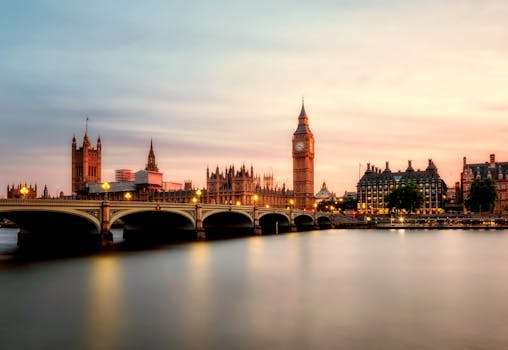
Now let’s talk about the bridge, because no visit to Big Ben is complete without walking across the Westminster Bridge—especially in the early morning or during sunset.
Built in 1750 and rebuilt in the mid-1800s, this bridge is one of the oldest road bridges across the Thames in London.
It was originally painted in a dull gray, but later painted green to match the House of Commons seats. (Fun fact: nearby Lambeth Bridge is painted red to match the House of Lords seats!)
It’s been featured in countless films, royal events, and—if you’re like me—dozens of tourist photos with that classic clock face in the background.
From the bridge, you get a spectacular view of the tower, the London Eye, and the Palace of Westminster in all its glory. It’s also a short walk to places like Parliament Square, Westminster Abbey, and St. James’s Park.
Nearby Stops Worth Your Time
If you’re planning a full afternoon around Big Ben (which I highly recommend), you’re in luck—because some of London’s biggest gems are just a short distance away. You won’t even need to hop on a bus or train unless your feet are absolutely done for the day.
Let’s take a little walking tour, shall we?
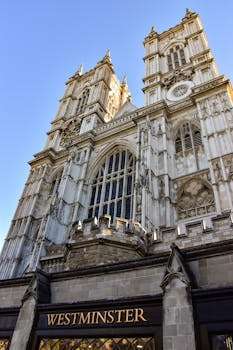
Westminster Abbey
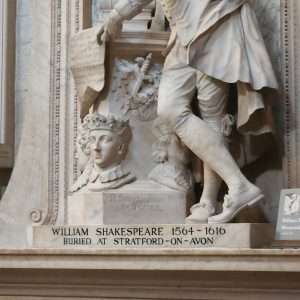
This one is a must-see. It’s where kings and queens are crowned, where royal weddings take place, and where national heroes are buried. Older than Big Ben by centuries—we’re talking 1065 AD—it’s steeped in British history and practically whispers stories as you walk through. From Henry VIII’s ancestors to Queen Elizabeth I, to more recent figures like Stephen Hawking and Sir Isaac Newton, it’s a powerful place of remembrance, reflection, and jaw-dropping architecture. Inside, don’t miss the Poets’ Corner—it’s where legends like Shakespeare, Dickens, and Jane Austen are honored.
Parliament Square
Right outside the Houses of Parliament, this iconic square is dotted with statues of political legends, including Winston Churchill, Nelson Mandela, and Mahatma Gandhi. It’s one of those spots that makes you pause and take in the magnitude of history and leadership. There’s something about standing in the same square where public protests, ceremonies, and national conversations have unfolded that makes you feel part of something bigger.
Trafalgar Square
Just a short walk up Parliament Street, Trafalgar Square is where the city seems to buzz a little louder. There are always street performers, folks taking photos by the fountains, and an endless stream of visitors. You’ll find Nelson’s Column towering at the center, surrounded by massive lion statues that the kids (and grandkids) love to climb. Pop into the National Gallery while you’re there—it’s free to enter and home to masterpieces by Van Gogh, Monet, da Vinci, and more. You could spend 15 minutes or 5 hours—either way, it’s worth it.
Charing Cross Station
Located just a few blocks from Trafalgar, this central London station is more than just a way to catch your next train—it’s considered the geographical center of London. All distances in the UK are measured from the Charing Cross marker. From here, you can easily venture to other historic neighborhoods or hop on the Tube if your legs need a break. And yes—there are plenty of nearby cafés for a coffee or snack break.
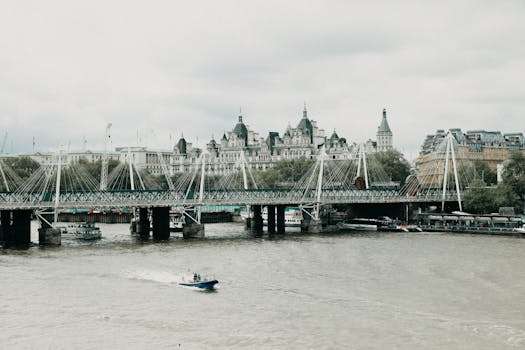
Hungerford Bridge & the South Bank
Now, if you’ve still got a little spring in your step (and you didn’t overdo it on the full English breakfast), Hungerford Bridge is a scenic pedestrian bridge that takes you over the Thames to the South Bank—one of the liveliest areas in London. From there, you can explore the Royal Festival Hall, grab a bite at Gabriel’s Wharf, or simply enjoy the walk along the river. You’ll see street art, musicians, and pop-up book fairs.

Or better yet—hop on a Thames river cruise for a unique perspective of the city skyline. You’ll glide past Shakespeare’s Globe, Tower Bridge, St. Paul’s Cathedral, and get that perfect shot of Big Ben’s clock face from the water.
Little Details That Make It Special
The sound of Big Ben is so iconic it’s broadcast on the BBC.
The tower is part of a UNESCO World Heritage Site.
You can spot different sizes of clock tower details up close, each one masterfully carved from cast iron.
The diamond jubilee restoration took several years and gave the tower a full facelift—now it’s more dazzling than ever.
And let’s not forget: the name Big Ben is believed to be named after Sir Benjamin Hall, a large man with a booming voice—and quite possibly a sense of humor to match his size.
My Honest Thoughts as a 60+ Visitor
There’s something about standing there, hearing those bells ring, and watching people from all over the world snap photos or simply stare in awe. I thought about the workers who built it, the residents of the United Kingdom who’ve heard it their whole lives, and the future generations who’ll one day stand where I did.
I may be “over 60,” but I felt just as amazed and wide-eyed as any first-time visitor. If anything, my age made it more special. I had the wisdom to slow down, really see everything, and appreciate just how incredible it is that something built nearly 200 years ago still runs like… well, clockwork.
So if you’re wondering if a visit to Big Ben is worth it, my answer is: Absolutely. Don’t miss it. Go now. Take photos. Listen to the chimes. Stand on the bridge and soak it in.
Age doesn’t make you late to the party. It just means you show up with stories to tell.
Let’s Chat!
Have you visited Big Ben before? What stood out to you?
Would you climb the 334 stone steps to the belfry if you could?
What’s one historic place that surprised or moved you the most?
Share in the comments—I’d love to hear your stories! 👣🕰️
14 thoughts on “Over 60 and Still on Time: Visiting Big Ben in London”
This is a great history lesson! I love the story about the pennies! I got to visit London with my university choir many years ago, but I’d love to go back and appreciate it at a different time in my life. Thanks for the touring guide and inspiration!
You are welcome! This was my first time visiting London, and I already want to go back!
This was such an inspiring read. I love how you beautifully captured the experience of visiting Big Ben while showing that age is never a limit to adventure. Thank you for sharing your journey and perspective.
Love this! Congrats on getting to see such a cool landmark and thanks for all the info on what makes it so special. It’s inspired me to keep saving for the trips I want to take too.
Living in London, I’m a little ashamed to say i haven’t visited Big Ben yet! I love how thorough this article ia!
This is on my bucket list, thanks for all of that great information. I knew it was big, but I didn’t realize it was THAT big! Now I really want to go. Thanks for sharing!
Such a classic London experience! I’ve never visited Big Ben, but it’s definitely a trip that’s on my bucket list and I really enjoyed reading this post.
Thanks!
This gave me chills! I love how you captured the feeling of being in the moment, not just visiting a landmark. Big Ben really is more than a clock—it’s like standing in the middle of history itself. Thank you for sharing this beautiful experience!
You are welcome and thanks for reading!
I’ve always wanted to visit London and see Big Ben. It is such an iconic landmark! I can only imagine how surreal it must feel to stand before something so rich in history. This is definitely at the top of my travel list!
You make me want to go to London more and more. I love hearing about the facts of a place and its attractions. Thank you for this visit!
What a delightful and informative post! I love your humor – “imagine the arthritis those hands must have if they were real” made me chuckle. Your passion for history really shines through, and I learned so much I didn’t know about Big Ben, especially the penny trick for adjusting the timing!
As someone who also appreciates good travel writing, I felt like I was right there with you experiencing the magic of standing under this iconic timepiece. Thanks for bringing Big Ben to life with such wonderful detail and personality! 🕰️
Thank you so much for your wonderful comments and thanks for reading!