
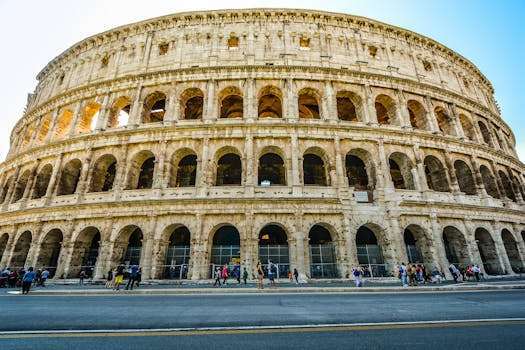
If you’re visiting Rome for the first time, there’s a good chance the Colosseum is high on your must-see list—and it should be. This massive ancient amphitheater, also known as the Flavian Amphitheatre, is one of the most famous monuments in the world.
Is the Colosseum tour in Rome really worth it in 2025?
After my visit this spring, I can honestly say: yes, it’s absolutely worth visiting the Colosseum—especially if you plan it right. I didn’t take a guided tour myself, but looking back, I can see how it would’ve added so much more depth to the experience.
There were moments where I stood there wishing I knew the full story behind what I was looking at.
So in this review, I’m sharing what I experienced firsthand, along with some helpful travel tips—like how to avoid the long lines, what I learned on-site, and why many visitors say a guided tour of the Colosseum can take your visit from good to unforgettable.
From what I saw and heard around me, those on guided tours were getting insights and background info that really brought the ruins to life.
And let me tell you—there were moments that hit me emotionally harder than I expected, even without a guide. Just imagine how much more powerful it could be with one.
Booking Your Colosseum Tour (Don’t Wing It!)
If you’re anything like me, the thought of showing up to a famous monument like the Roman Colosseum without a plan is… stressful.
And let me tell you: showing up without tickets is one of the fastest ways to waste your precious time in Rome.
Ticket Types (What to Know Before You Buy)
There are several ways to experience the Colosseum, depending on your budget and interest level:
This is the most basic entry ticket. It includes access to the Colosseum, Roman Forum, and Palatine Hill. Ideal for visitors who want to explore at their own pace without a guide. Keep in mind that this option does not include access to special areas like the underground chambers or arena floor.
This ticket includes entry plus a guided tour, usually in a small group. It’s a great way to learn about the historical context, architecture, and life during the Roman Empire. Many tours include access to the arena floor and fast-track entry, which helps avoid long lines.
This option provides access to areas not included in the standard ticket, such as the underground tunnels, cages, and sometimes the third tier or upper levels. It typically includes a guide and requires booking in advance due to limited availability. It offers a more in-depth experience of the Colosseum’s structure and inner workings.
Various city passes and combo tickets are available. The Roma Pass, for example, offers discounted access to multiple attractions, including the Colosseum, Vatican Museums, and Sistine Chapel. This option can be useful for visitors with packed itineraries or those looking to save money across several major attractions.
Travel Tip: Buy your tickets from the official website to avoid hidden fees.
Avoid sketchy sellers near Piazza del Colosseo. They’re selling overpriced “VIP” tours that often don’t deliver.
The Entry Process: Lines, Security & Timing
It was very crowded when we went. Even in 2025, with all the tech upgrades and online ticketing, the Colosseum draws massive tour groups and crowds.
If you are handicap, you will be able to get in quickly.
We arrived at the Colosseum late in the morning, thinking we had timed it okay. But nope—it was already very crowded. I mean packed.
At several points, it felt like we were squeezed in shoulder to shoulder, like sardines in a can.
Moving around took patience, especially near the best photo spots and lookout points.
And let’s not forget the sun. Even in spring, it started heating up fast.
There’s not much shade around the Colosseum, and that stone just reflects the heat right back at you. Water and comfortable shoes are a must.
Now here’s where a little planning would’ve helped…
But the good news?
Most people were incredibly patient. Once a few folks finished their photo ops and selfies, they moved aside, giving the next person a chance.
It was like an unspoken rhythm we all fell into.
Everyone seemed respectful and mindful of each other. We all shared the same purpose: to enjoy the Colosseum, soak up the views, and take in the history.
There was this quiet understanding that we were standing in a place with deep significance—and people acted like it.

Inside the Colosseum
Standing inside this largest amphitheater in the world was surreal. The sheer size of the structure is jaw-dropping. But once you realize what happened here, it hits different.
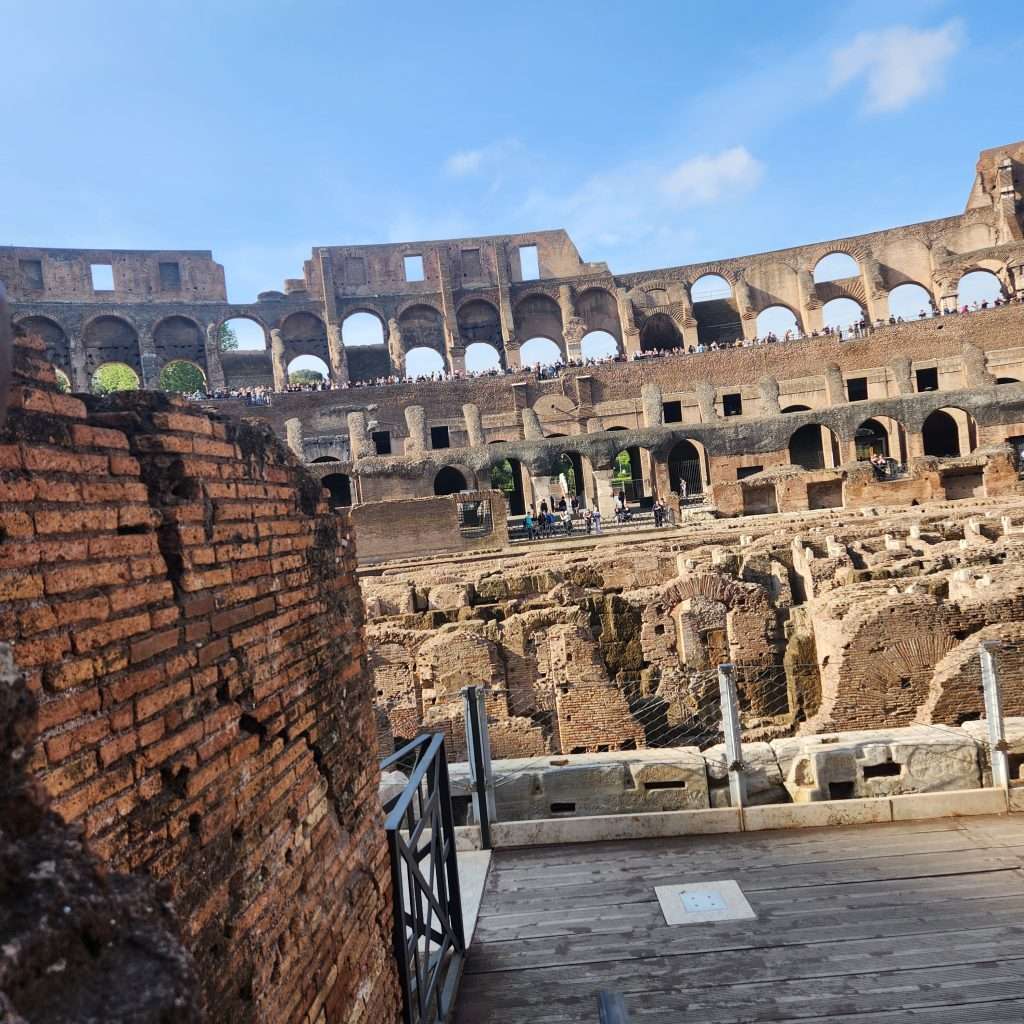
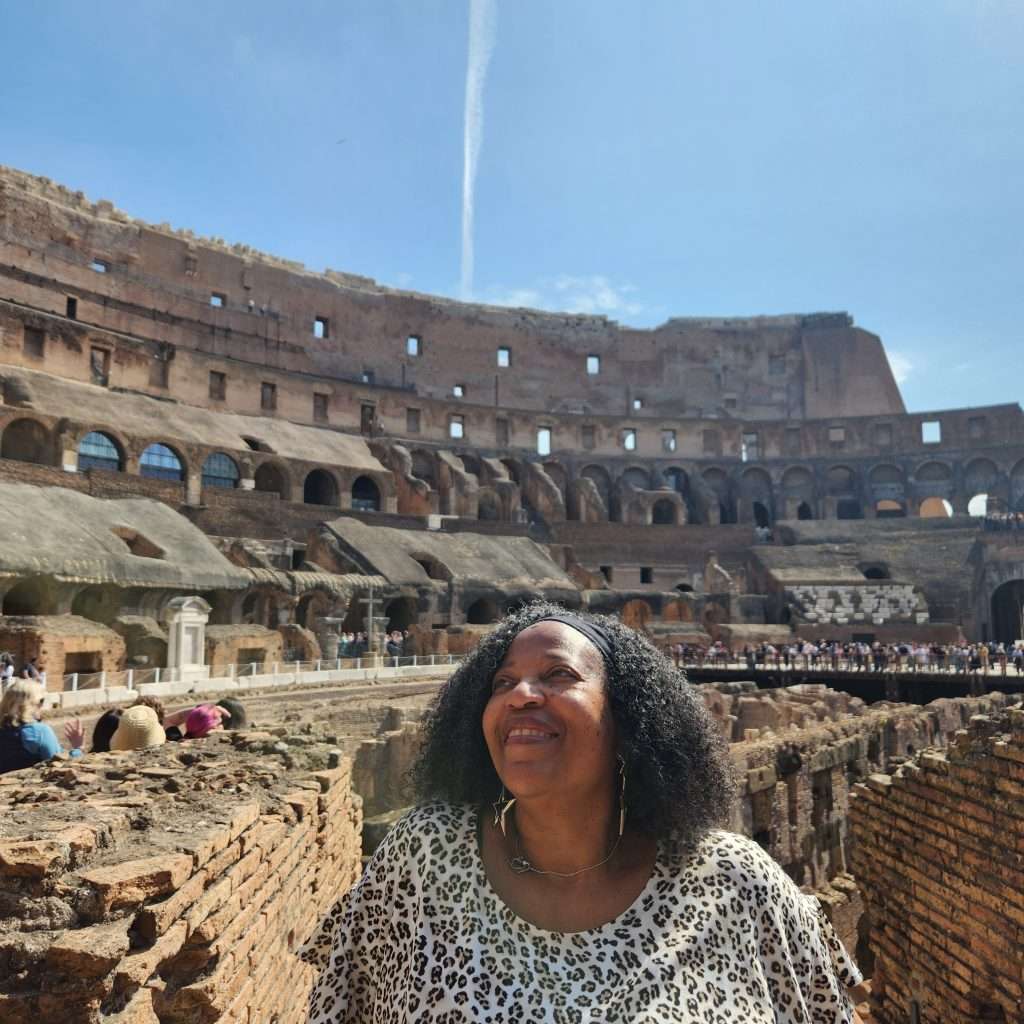
The arena floor—where we stood—was once stained with blood from gladiator fights, animal hunts, and public executions.
Over 400,000 people and more than a million animals are believed to have died here during the days of the Roman Empire.
My chest tightened thinking of the Roman people cheering in those stone stands. It was tragic and powerful.
Video Presentation
On the first level, there was a video presentation playing inside one of the exhibit areas.
It gave a quick but powerful overview of the Colosseum’s history—how it was built, what it was used for, and how it evolved through the centuries.
It was a nice way to get your bearings before exploring deeper.
Even if you don’t take a guided tour, this video helps you understand the gravity of what happened here and the role the Colosseum played in the heart of Roman life.
There are informational signs and markers throughout the Colosseum, which help provide a general sense of what you’re looking at.
While they offered some good historical context, I could tell that having a tour guide would’ve added a deeper layer of understanding—especially when it came to the structure’s purpose, the layout, and the dramatic events that unfolded here.
If you want a more complete picture of the site’s historical significance, a guided tour might be the way to go.
You hear stories of how people entered by class, how the general public sat high up on the top level, and how the emperor had a private box view.
Some sections of the Colosseum were blocked off during my visit, likely due to ongoing restoration work or preparations for new exhibits.
While it was a little disappointing not to access every area, it’s understandable—maintaining a site this ancient and visited by millions every year takes constant care.
If you’re planning a visit soon, be aware that access to certain parts may vary depending on what’s under construction or being updated.
Travel Tip: The best shots of the arena floor are from the upper levels, especially during golden hour. Bring your best camera and give yourself time to explore.
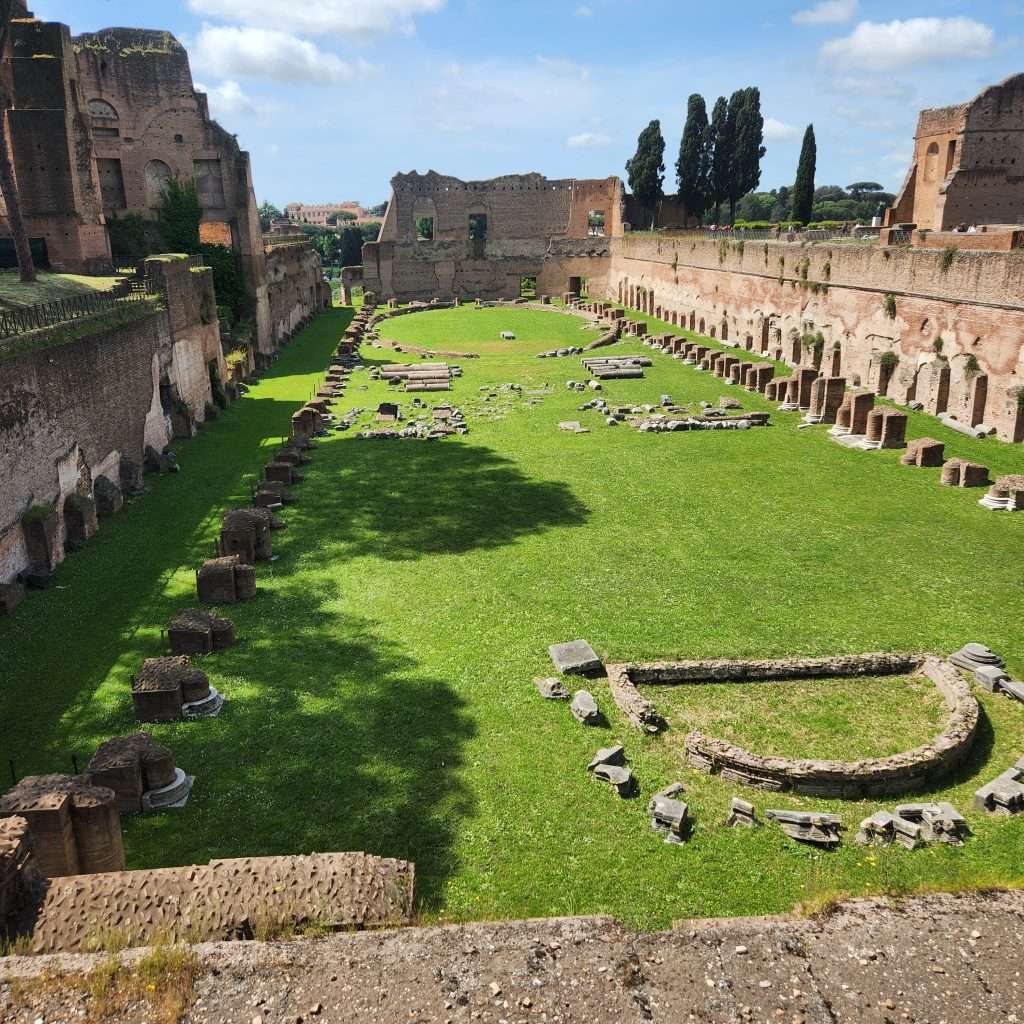
Not Far from Here: Exploring Palatine Hill
Just a short walk from the Colosseum, Palatine Hill is one of the most underrated parts of the whole experience—but it’s packed with history and absolutely worth your time.
This is where ancient Rome began. According to legend, it’s the spot where Romulus founded the city after his infamous fight with Remus.
Once you climb the hill (it’s not too bad), you’re rewarded with peaceful paths, pine trees, and sweeping views over the Roman Forum.
Scattered across the grounds are the remains of imperial palaces, private homes, and ancient structures that once belonged to Rome’s wealthiest citizens and emperors.
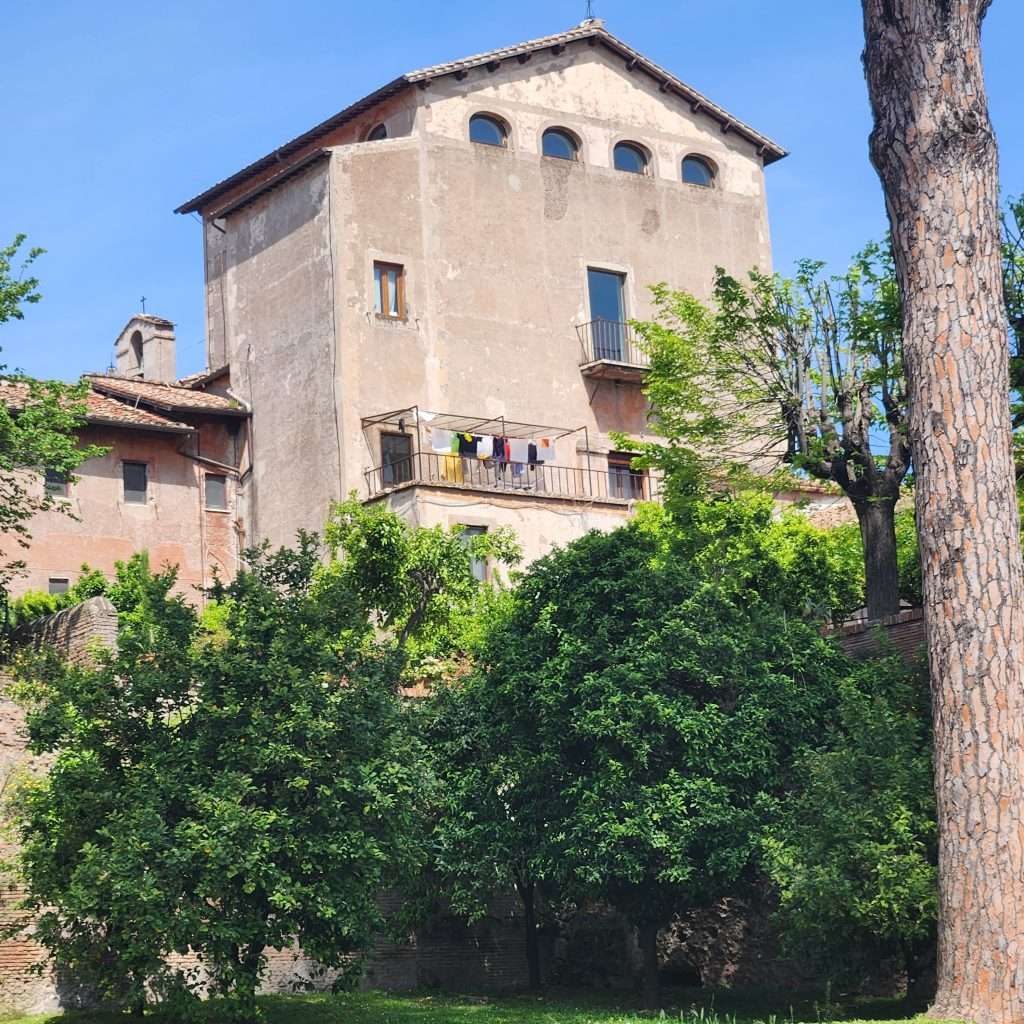
You’ll see what’s left of the Palace of Domitian, grand courtyards, fountains, and even gardens that hint at how luxurious life was back then.
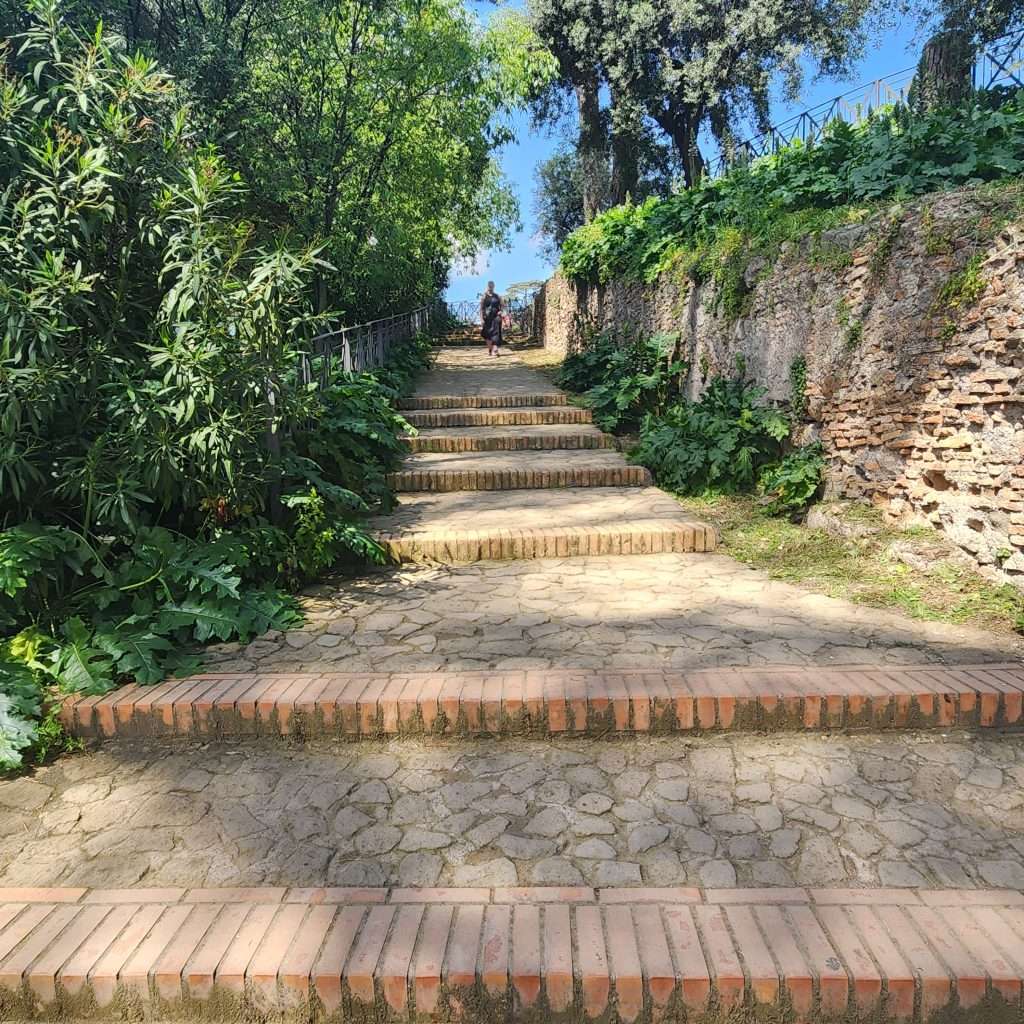
It’s quieter up here compared to the Colosseum below, which gives you a chance to slow down, reflect, and take in the surroundings.
Plus, it’s a great place to grab some incredible panoramic shots—especially if you’re visiting in the morning or late afternoon when the light hits just right.
If you’re visiting the Colosseum, Palatine Hill is included with your ticket, so don’t skip it. It connects directly to the Roman Forum, so you can easily keep exploring without ever leaving the historical zone.
Roman Forum & Palatine Hill: Don’t Rush These Gems
Many people visit the Colosseum and skip the rest. Big mistake.
The Roman Forum tour walks you through the old heart of ancient Rome: temples, government buildings, and markets where Romans lived, prayed, and gossiped.
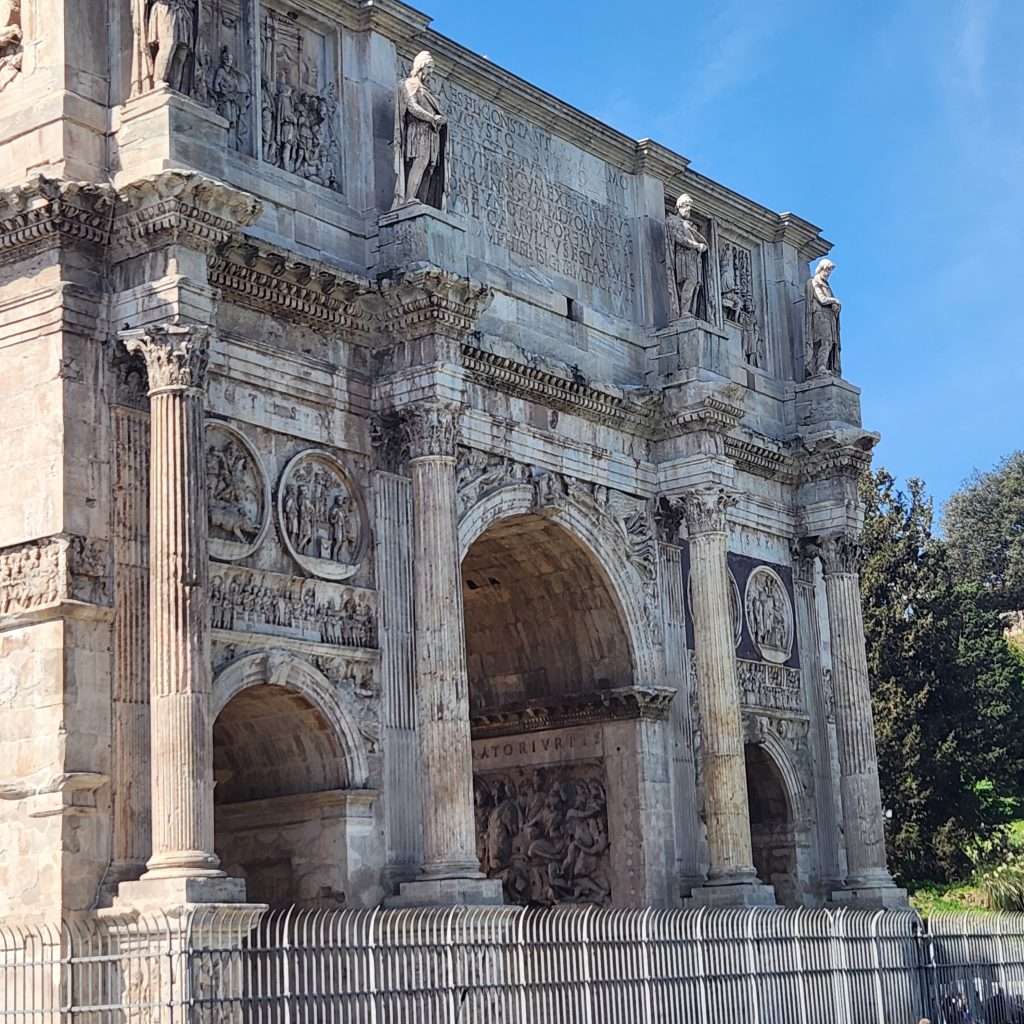
You’ll pass the Temple of Julius Caesar, the Arch of Titus, and several archaeological sites that still blow the mind.
Then it’s a climb up to Palatine Hill—one of the oldest parts of Rome and home to imperial palaces. Some people call it Palantine Hill, but the correct spelling is Palatine.
You get sweeping views of the Forum below and a real sense of what luxury meant during the empire.
Fun fact: It’s believed that Romulus (as in Romulus and Remus) founded the city of Rome here!
Travel Tip: Bring water, wear comfy shoes, and don’t skip this. Some of my best Colosseum photos were actually taken from Palatine Hill looking down.
The Bookstore Near the Exit
Near the exit of the Colosseum, there’s a small bookstore tucked off to the side. It’s easy to miss, but it’s worth popping your head in—if you can move around, that is.
When I went, the store was extremely crowded, to the point where it was tough to even walk through.
Between the long checkout line and the shoulder-to-shoulder shuffle, I decided not to stick around or buy anything.
Still, I took a quick glance and saw some pretty interesting things on the shelves—guidebooks about Domus Aurea, Circus Maximus, the fall of the Roman Empire, and even children’s books about gladiators.
If you catch it at a less chaotic time, it could be a fun and informative place to explore.
Just know it can get just as packed as the Colosseum itself.
Is a Colosseum Tour in Rome Worth It?
If it’s your first time in Rome, the answer is a loud, resounding YES.
This is one of the most popular attractions in Italy for a reason.
The Colosseum, Roman Forum, and Palatine Hill together tell the story of a civilization that shaped the world. But to truly appreciate it, you need context, time, and a little bit of guidance.
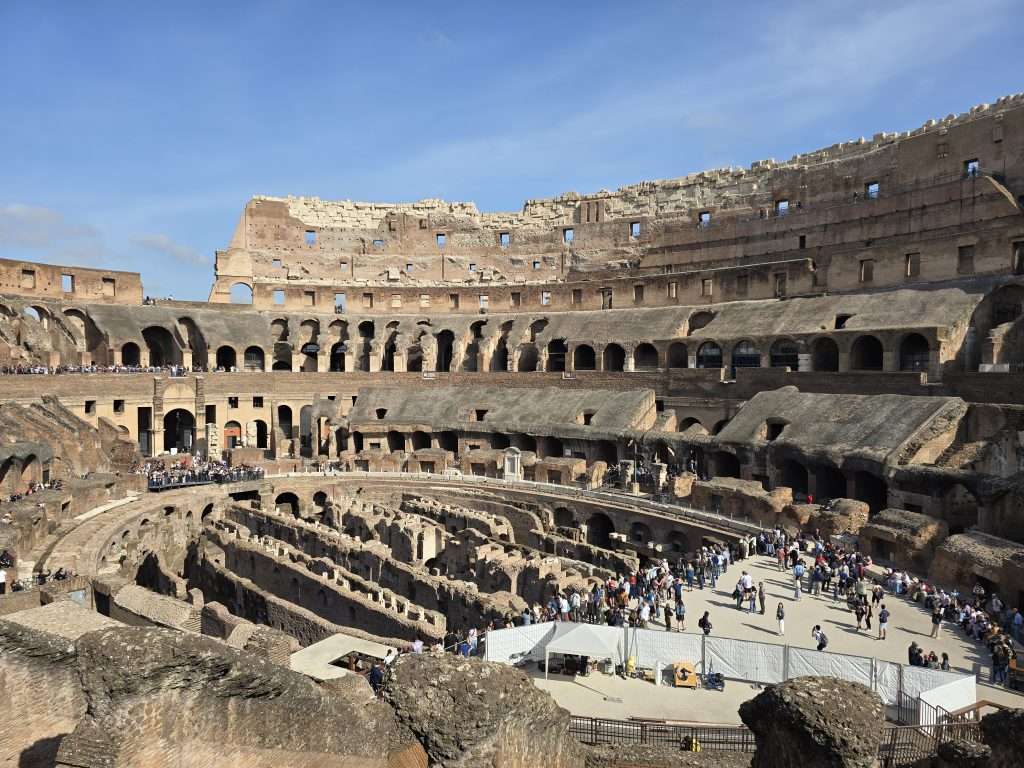
If you decided to go all-in with an underground tour, stick to a guided Colosseum tour, or brave it solo with audio guide headsets, you’ll walk away changed.
It’s more than a photo op—it’s a window into the greatness and cruelty of ancient Rome.
Would I go back? Yes. Maybe next time I’ll visit the third tier, or spend more time diving into the Flavian Amphitheatre’s structure with a historian-led tour.
Rome rewards repeat visits.
And if you’re wondering the best way to start your Rome journey?
The Colosseum is it. Just… book in advance, bring water, and give yourself plenty of time.
Thank you for sharing your experiences and why you should book a tour! And also, thank you for sharing the photo tips (and great photos).
Thank you!
I enjoyed reading about your experience visiting the Colosseum in Rome. I hope to travel there someday! We usually enjoy having a guided tour. It’s a little bit extra to your experience. Thanks for the review and the beautiful pictures!
Thank you! And thanks for reading!
Thank you for sharing your experience visiting the Colosseum in Rome. I appreciate your tip to visit Palatine Hill and that it’s included with the ticket.
You are welcome!
Had those moments too, when I was wondering about the story behind a particular attraction and wished I had gotten myself a tour guide. Tour guides are beneficial indeed.